Explore the Power of Water Wheels: A Complete Guide to History, Types, and Uses
Originating as early as the 4th century BCE, water wheels became widespread during the Roman Empire and saw major development through the Middle Ages and the Industrial Revolution. Before the widespread use of electricity and fossil fuels, water wheels were among the most efficient renewable energy sources, turning rivers and streams into essential engines of production.
Today, while modern hydropower has largely replaced traditional water wheels, the principles behind them remain influential. They are still used in small-scale energy projects, educational demonstrations, heritage preservation, and sustainable development efforts.
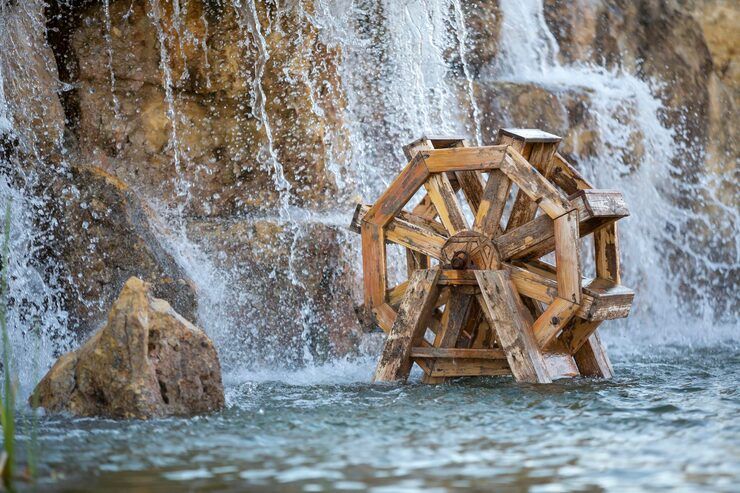
Why water wheels matter today
While water wheels may seem like relics of the past, they still serve meaningful purposes in the present:
-
Sustainable energy source: Water wheels generate power from a renewable source—flowing water—without greenhouse gas emissions.
-
Low environmental impact: In contrast to large dams, small-scale water wheels can operate with minimal disruption to ecosystems.
-
Off-grid solutions: In rural or remote areas, especially in developing countries, water wheels offer a cost-effective and low-maintenance source of power.
-
Educational and historical value: Water wheels help illustrate mechanical engineering concepts and serve as living exhibits of technological heritage.
Who benefits from water wheels today?
-
Rural communities with river access
-
Educational institutions and museums
-
Heritage sites preserving historical technologies
-
Sustainability-focused engineers and researchers
Problems water wheels help solve:
-
Lack of electricity in off-grid areas
-
Rising demand for clean, local energy
-
Preservation of historical and cultural assets
-
Need for low-tech, resilient power systems in disaster zones
Recent updates and trends in water wheel technology
In recent years, water wheel technology has seen a small resurgence, especially in areas focused on local, renewable energy generation. Below are key updates and trends:
| Development | Description |
|---|---|
| Micro-hydropower growth | In 2024, several countries expanded micro-hydro initiatives using traditional water wheel models for small communities. |
| Educational models | Universities and NGOs have developed portable water wheel kits for STEM education and rural innovation training. |
| Hybrid systems | Some 2025 prototypes combine water wheels with solar panels and energy storage systems for hybrid clean power generation. |
| Open-source designs | Engineers have released blueprints and CAD files for low-cost, DIY water wheels to encourage local manufacturing. |
For example, the International Renewable Energy Agency (IRENA) highlighted in its 2024 Community Energy Report that water wheels are among the most cost-effective micro-energy options for areas with consistent water flow.
Legal frameworks and policies affecting water wheel use
The use and installation of water wheels, particularly in rivers or public water systems, often falls under local and national environmental and energy regulations. These rules help ensure safe and sustainable development of water-powered systems.
| Country | Relevant Regulations | Key Notes |
|---|---|---|
| United States | Clean Water Act, FERC licensing | Projects in navigable waters require permits and environmental impact assessments. |
| United Kingdom | Environment Agency Permitting | Installation of any hydro devices, including water wheels, must consider fish passages and flow regulation. |
| India | Ministry of New and Renewable Energy (MNRE) Guidelines | Supports small hydro projects under 25 MW, including traditional water wheels. |
| EU Countries | Water Framework Directive | Promotes sustainable water usage; small hydro installations must maintain ecosystem health. |
Some governments offer subsidies or technical support for micro-hydropower projects, especially in areas where grid extension is impractical.
Useful tools and resources for water wheel projects
Whether for educational, historical, or practical use, a variety of tools and resources are available to support those interested in water wheels:
Design and Simulation Tools:
-
HydroCalc – A calculator for estimating hydro power output based on flow rate and head.
-
OpenFOAM – Open-source CFD software for simulating water flow around wheel blades.
-
SolidWorks or Fusion 360 – CAD tools for designing custom water wheel parts.
Educational Kits and Templates:
-
Build-It-Yourself Water Wheel Kits (available from science education suppliers)
-
Instructables & Thingiverse – Community platforms with free DIY guides and 3D-printable templates.
Organizations and Websites:
-
Practical Action (practicalaction.org) – Offers field-tested manuals on small-scale water power.
-
International Small Hydro Atlas – A resource for global potential and project data.
-
IRENA and UNDP – Provide funding guides and case studies on rural hydro projects.
Frequently Asked Questions
1. What are the main types of water wheels?
There are three main types:
-
Overshot: Water flows over the top of the wheel. Efficient, suitable for steep terrains.
-
Undershot: Water flows under the wheel. Ideal for slow, shallow rivers.
-
Breastshot: Water hits the wheel midway. Balanced efficiency, works with medium head.
2. How much power can a water wheel generate?
It varies based on the wheel size, water flow, and design. A small water wheel can generate from 0.5 kW to 10 kW—enough to power lights, small machines, or charge batteries in remote areas.
3. Are water wheels environmentally safe?
When properly designed, small water wheels have a minimal environmental impact. Unlike large dams, they do not significantly disrupt water flow or fish habitats.
4. Can I install a water wheel on my property?
It depends on local regulations. In most countries, even small installations require permits to ensure environmental safety and water rights compliance.
5. Are water wheels still used commercially?
While not common in large-scale industry, water wheels are still used in small businesses (e.g., artisan mills), micro-hydro projects, and eco-tourism sites.
Summary Table: Comparing Water Wheel Types
| Type | Water Entry Point | Efficiency | Best Use |
|---|---|---|---|
| Overshot | Top | High (up to 70%) | Hilly areas, small streams |
| Breastshot | Middle | Moderate | Medium flow and head rivers |
| Undershot | Bottom | Lower | Flat terrains, slow rivers |
Final thoughts
Water wheels stand at the intersection of ancient engineering and modern sustainability. Though their role has changed over time, they continue to offer valuable lessons in renewable energy, efficient mechanics, and cultural heritage.
From powering rural communities to inspiring STEM education and preserving industrial history, water wheels are more than just old machines—they represent a timeless solution adapted for today’s challenges. By understanding their history, types, and potential, we can rediscover the power of water in its simplest and most sustainable form.