The Ultimate Guide to 3D Laser Scanning Services: Basics, Benefits, and Applications
This technology was originally developed for industrial applications like aerospace and automotive design but is now widely used in architecture, construction, archaeology, engineering, and even forensics. It provides a fast and efficient way to collect complex geometries without manual measurements, reducing error and time.
The existence of 3D laser scanning is tied to the growing need for digital workflows, accurate documentation, and enhanced visualization across industries.
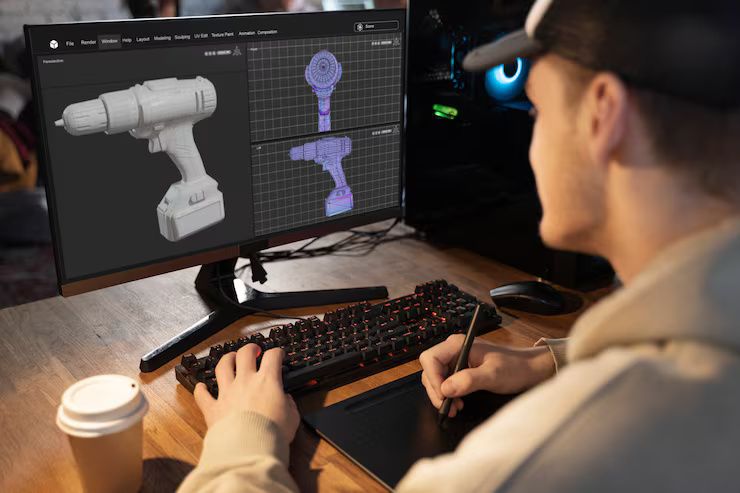
Why 3D laser scanning matters today
In today’s increasingly digital and detail-oriented world, 3D laser scanning offers several advantages that solve real-world challenges:
-
Accuracy: It captures highly detailed measurements that would be difficult or impossible to achieve manually.
-
Speed: A scan can take minutes while capturing millions of data points.
-
Safety: Reduces the need for personnel to access dangerous or hard-to-reach areas.
-
Documentation: Creates long-lasting digital records useful for restoration, monitoring, and analysis.
Who uses 3D scanning services?
-
Construction and architecture: For as-built documentation, renovation planning, and clash detection in BIM (Building Information Modeling).
-
Manufacturing: For quality control and reverse engineering.
-
Cultural heritage: Museums and archaeologists use it to preserve and study historical artifacts and sites.
-
Public safety: Law enforcement uses it to recreate accident scenes for investigation.
-
Urban planning: Helps municipalities visualize infrastructure projects and manage assets.
Problems it solves:
-
Reduces reliance on outdated or incomplete blueprints
-
Improves collaboration with accurate visual data
-
Minimizes risk by reducing manual field measurements
-
Lowers project rework costs due to better planning and precision
Recent updates and trends in 3D laser scanning (2024–2025)
In the past year, several developments have advanced the 3D scanning field:
| Trend | Description |
|---|---|
| Mobile and handheld scanning | Devices like the Leica BLK2GO and Trimble X7 are making 3D scanning more portable and field-friendly. |
| Integration with AI | AI is being used to automate feature recognition in point clouds, speeding up modeling workflows. |
| Cloud-based processing | Platforms like Autodesk ReCap and FARO Sphere allow users to store, process, and share scan data in real time. |
| Lower hardware costs | Entry-level laser scanners are becoming more affordable, opening up access to smaller firms and individuals. |
| AR/VR compatibility | Scanned environments can now be integrated with augmented or virtual reality for immersive experiences in design, training, or heritage preservation. |
In January 2025, several software providers like Autodesk and Bentley Systems announced enhanced compatibility between their 3D modeling tools and real-time point cloud data, significantly improving collaboration in architecture and civil engineering projects.
Laws, regulations, and policies around 3D scanning
The use of 3D laser scanning is influenced by legal and regulatory frameworks depending on the region and application.
| Regulation/Policy | Region | Relevance |
|---|---|---|
| GDPR (General Data Protection Regulation) | EU | Scanning public spaces may involve capturing identifiable personal data, requiring consent or data anonymization. |
| FAA UAV Regulations | USA | Using drones equipped with 3D scanners must comply with airspace and flight safety regulations. |
| Construction Safety Codes | Global | 3D scans must follow safety and accuracy standards for documentation and inspection purposes. |
| Cultural Heritage Protection Laws | Worldwide | Digital scans of historical sites may need permits and must respect heritage conservation protocols. |
Additionally, government programs in countries like Germany, Japan, and the UAE promote the use of digital construction and BIM workflows, where 3D scanning plays a foundational role.
Tools and resources for 3D scanning and modeling
A variety of tools and services support 3D scanning tasks, from data capture to processing and modeling.
Popular 3D laser scanners:
-
Leica RTC360 – Fast, high-precision terrestrial scanner
-
FARO Focus S – Compact scanner for indoor/outdoor environments
-
Trimble X7 – Self-calibrating and user-friendly device
-
ZEB Horizon – Handheld LiDAR scanner for mobility
Software for point cloud processing:
-
Autodesk ReCap Pro – Processes scans and integrates with Autodesk design tools
-
CloudCompare – Open-source tool for editing and analyzing point clouds
-
FARO SCENE – Used for scan registration, visualization, and analysis
-
Bentley ContextCapture – Converts reality data into 3D models and maps
Other helpful tools and services:
-
Sketchfab – For hosting and sharing 3D models online
-
Matterport – 3D camera and cloud platform for interior scanning
-
3D scanner rental services – Allow occasional users to access equipment without buying
Templates and standards:
-
BIM execution plan templates (from national BIM standards)
-
ISO 19650 for managing information using BIM, which supports scan-to-model workflows
Frequently Asked Questions
What is the difference between LiDAR and 3D laser scanning?
LiDAR (Light Detection and Ranging) is a form of 3D laser scanning that uses laser pulses to measure distances. While LiDAR typically refers to airborne or drone-based scanning, 3D laser scanning is often used more broadly to include terrestrial and handheld systems.
How accurate is 3D laser scanning?
Most modern 3D laser scanners can achieve millimeter-level accuracy, depending on the equipment and scanning conditions. This makes them highly suitable for engineering and documentation tasks.
Can I use a 3D scanner indoors and outdoors?
Yes. There are scanners specifically designed for both environments. Some devices are optimized for outdoor use (with weather protection), while others are tailored for capturing interiors like buildings or rooms.
Do I need technical skills to use 3D scanning software?
Basic tasks like scanning and viewing point clouds can be done with minimal training. However, advanced modeling, editing, or BIM integration may require experience or professional support.
Is 3D scanning allowed in public areas?
It depends on local regulations. In many areas, capturing public data requires permits, especially if individuals or private property might be recorded. Always check for privacy and legal restrictions before scanning in public spaces.
Example comparison table: scanner types and use cases
| Scanner Type | Best For | Advantages | Limitations |
|---|---|---|---|
| Terrestrial (Tripod) | Buildings, infrastructure | High precision, long range | Bulky, less mobile |
| Handheld | Small objects, interiors | Portable, easy to use | Lower range, limited battery |
| Mobile (Backpack/Dolly) | Large indoor spaces | Fast, walk-through capture | Higher cost |
| Drone-mounted (UAV) | Terrain, inaccessible areas | Aerial coverage | Regulatory constraints |
Final thoughts
3D laser scanning has transformed how we measure, document, and design the physical world. Whether capturing the details of a historical monument, scanning a factory floor, or preparing a digital model of a building, the technology delivers both accuracy and efficiency.
With the rise of mobile scanners, cloud platforms, and AI-enhanced processing, 3D scanning is becoming more accessible and integrated across industries. Understanding its applications, tools, and regulations helps users—from professionals to the curious general public—make informed decisions about adopting or using this powerful technology.